Abstract
The hybrid discrete/continuous nature of task and motion planning (TAMP) results often in a combinatorial explosion. This challenge is even more pronounced in multi-robot TAMP problems due to the increase in dimensionality of the action space. Previous works use action feasibility prediction as a heuristic to accelerate TAMP. However, these methods are limited to box-shaped objects and specific single or dual robot settings. In this paper, we propose a feasibility-enabled multi-robot TAMP algorithm capable of tackling complex multi-robot manipulation problems. Also, we expand on our previous work on action and grasp feasibility prediction [1] by extending its use to mesh-shaped objects. We demonstrate the performance of our method compared to a non feasibility-informed baseline, and show its ability to handle TAMP problems requiring the collaboration of multiple robots..
Proposed Model
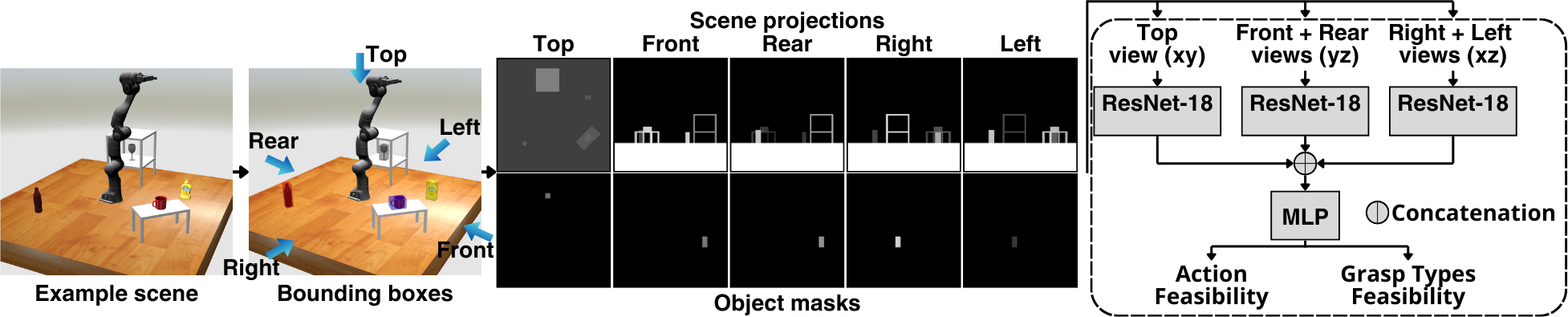
The action and grasp feasibility prediction neural network architecture (AGFPNet).
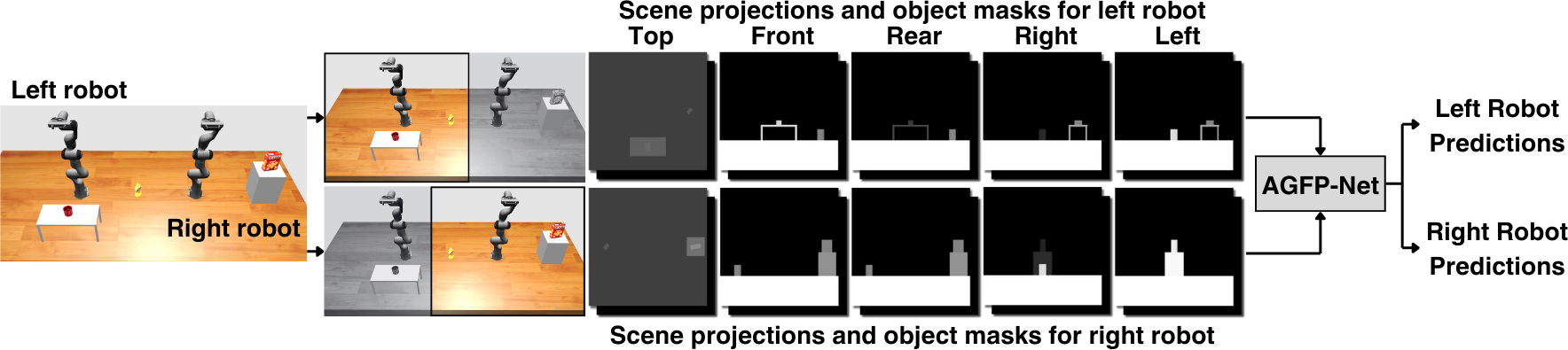
A visualization of the proposed extension of AGFPNet to multi-robot settings.
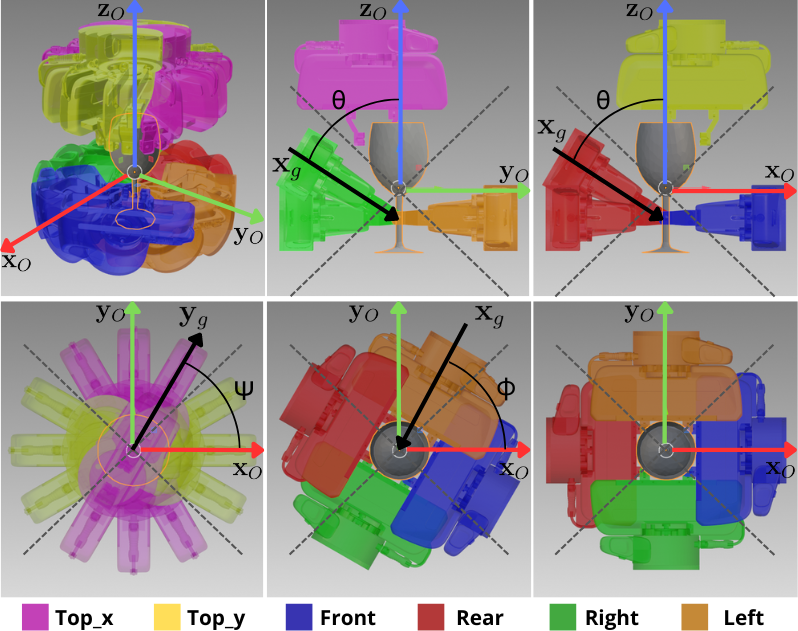
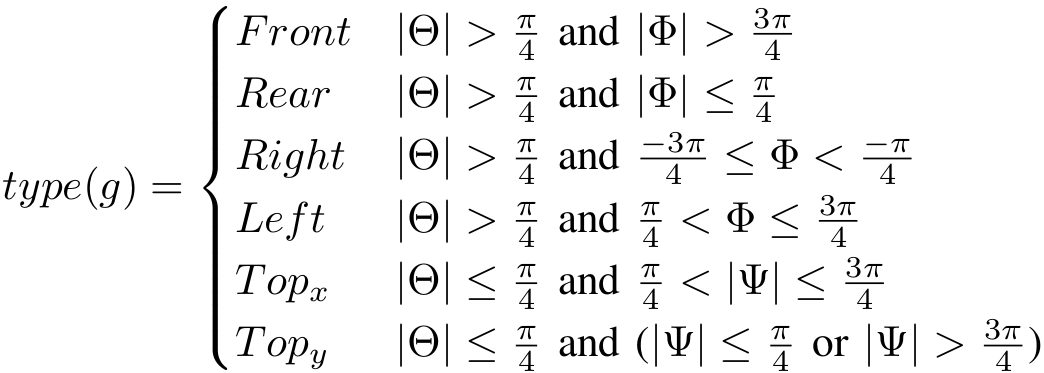
A visualization of the proposed extension of grasp representation to mesh-shaped objects.
Benchmarks
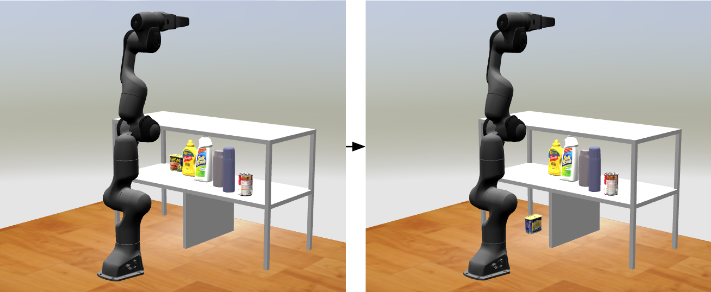
Access problem: A single robot has to move a meat can. A number of mesh objects are however blocking access to it, which requires removing all blocking objects to access the wanted one, before returning them to their initial pose.
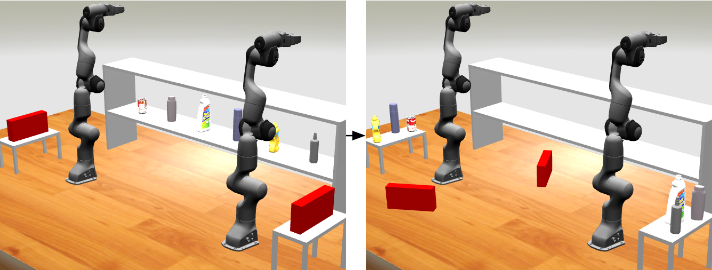
Sort problem: A dual-robot task where objects must be sorted onto two pre-occupied tables. The challenge involves finding feasible placements on narrow surfaces, with each robot restricted to accessing only one table, and a subset of the objects only.
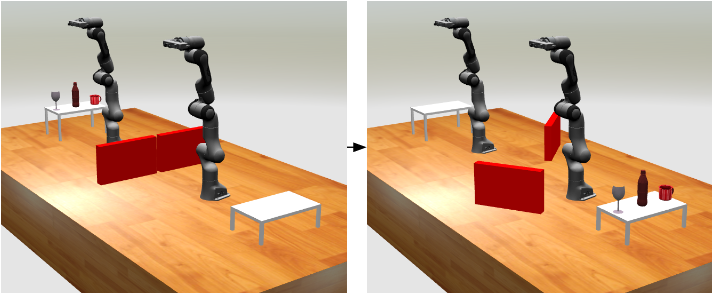
Clear problem: Two large objects (in red) span over the intersection region of two robots’ workspaces, rendering Pass actions infeasible. The robots have to first clear the intersection region before moving a set of objects from one table to another.
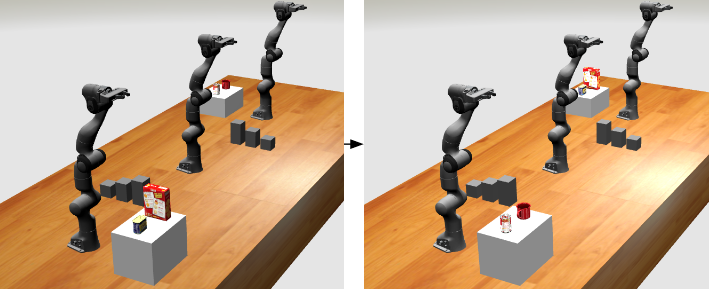
Longswap problem: Three sequential robots have to collaborate to swap the placements of 4 objects. The intersection regions between robots’ workspaces are, however, partially blocked by a set of obstacles.
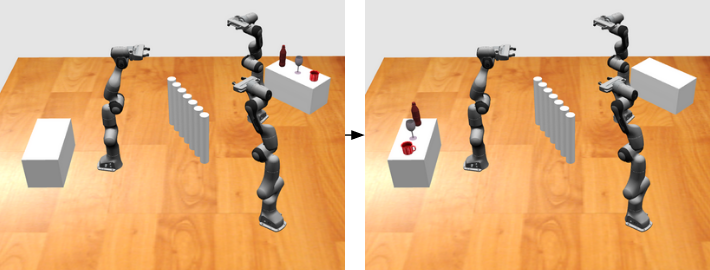
Middleman3 problem: Three robots form a triangle such that there is an intersection between every pair of robots' workspaces. One of the intersection regions is blocked by a fixed obstacle, forcing the robots to perform two $Pass$ actions via a middleman robot to move three objects from one counter to the other.
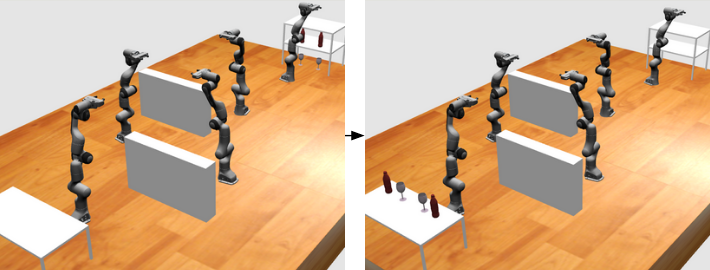
Middleman5 problem: Four symbolic action sequences allow each one of four objects to be moved from a shelf to a table, however three of them are blocked by fixed obstacles. The planner must find the only geometrically feasible sequence of robots exchanges to solve the problem.
Results
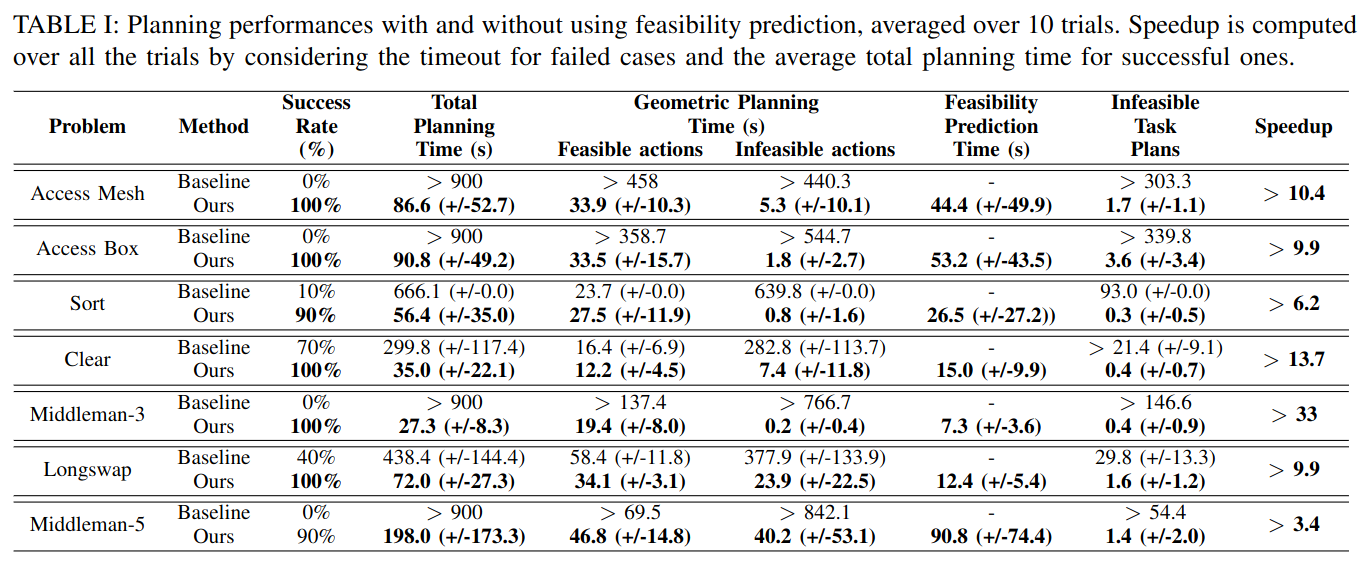
Visualizations
Plan execution visualizations for each problem.
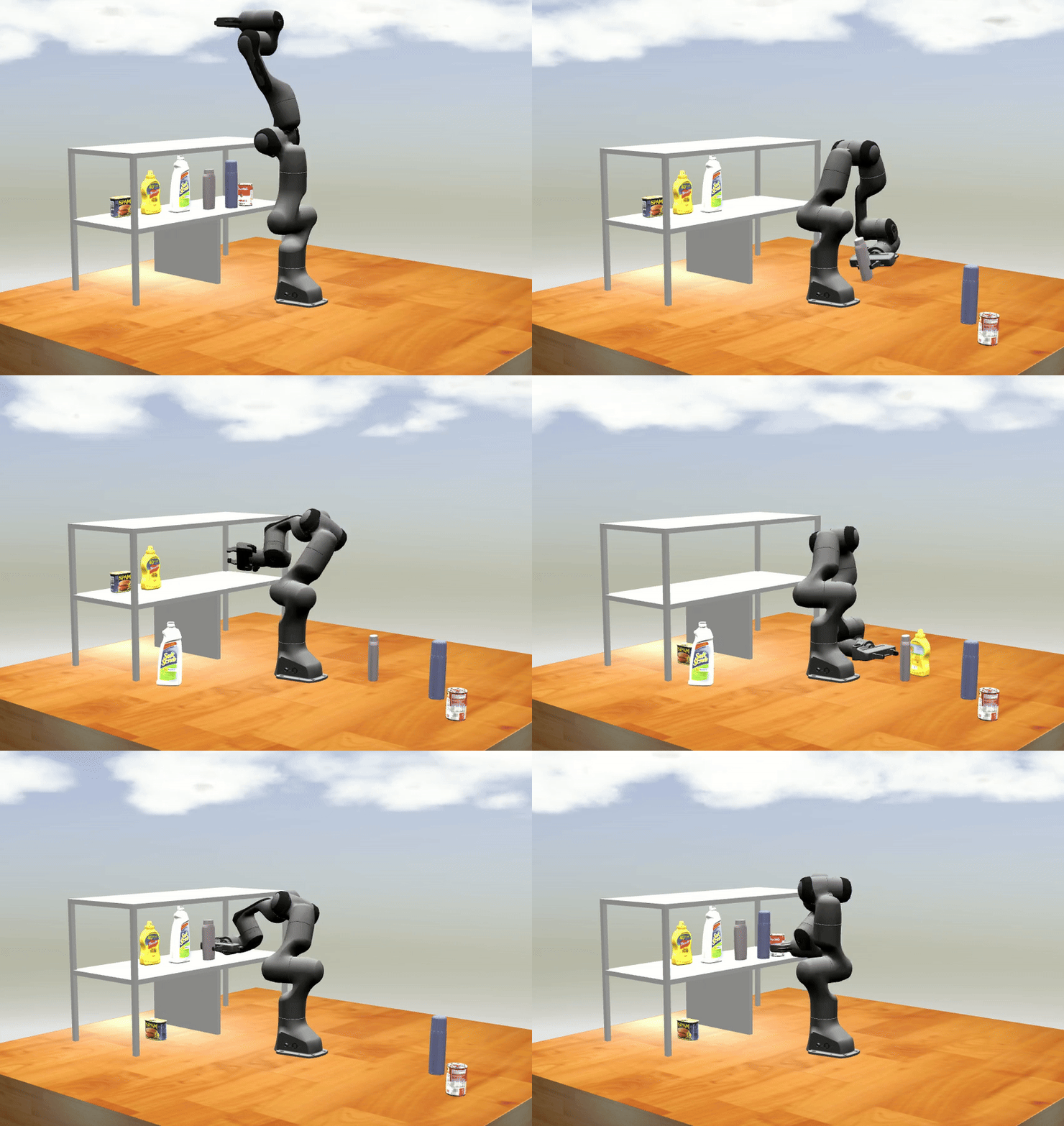
Access Problem
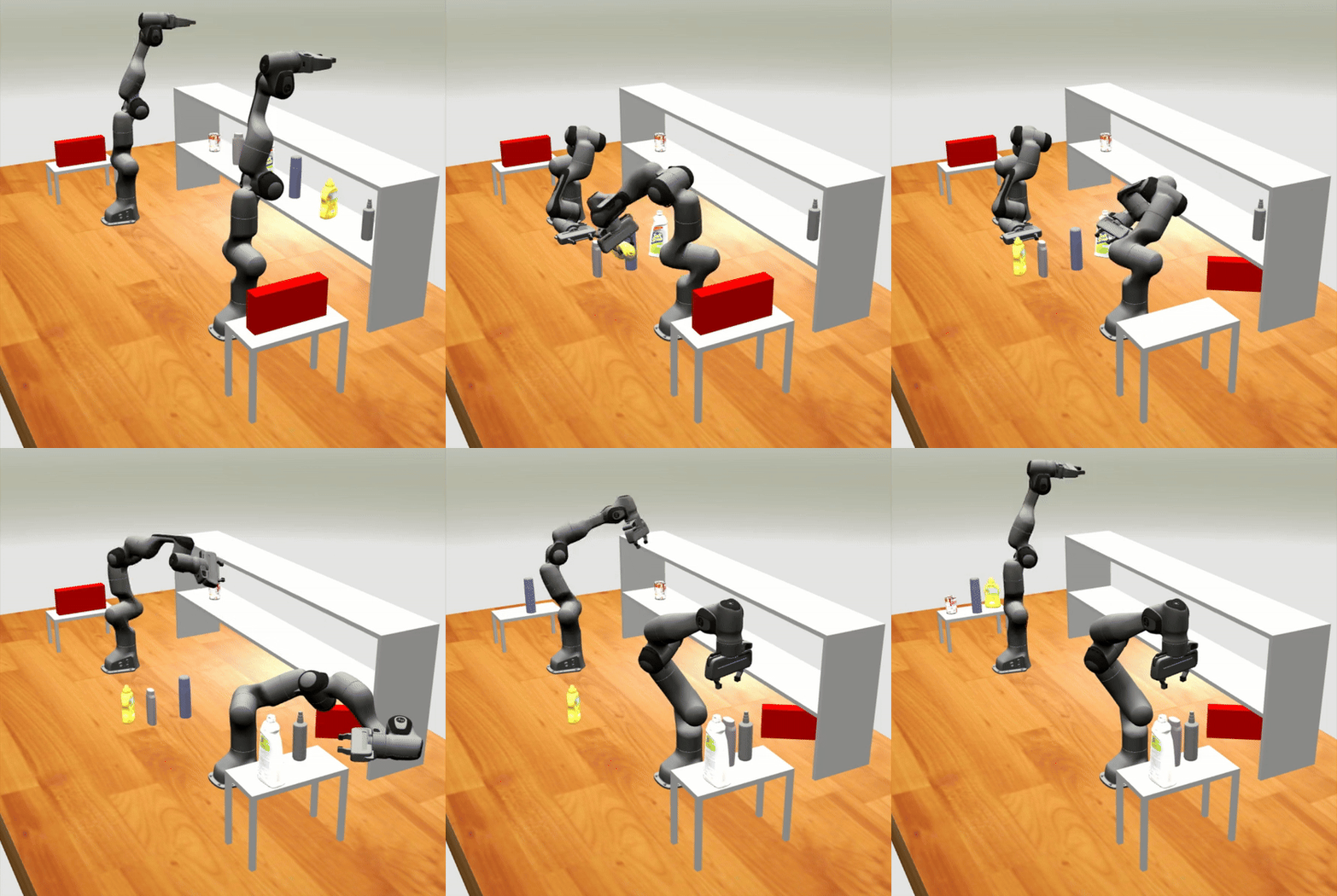
Sort Problem
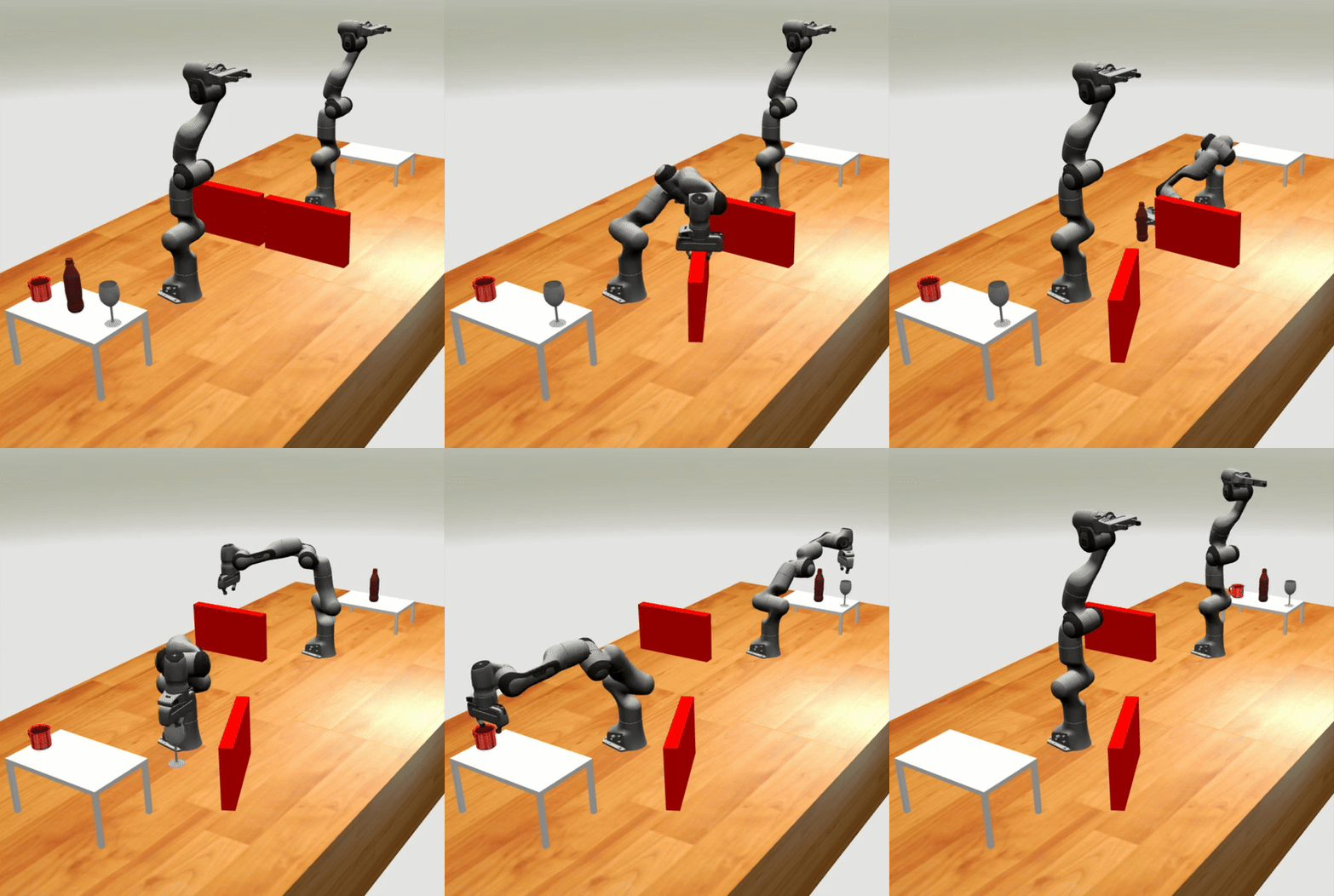
Clear Problem
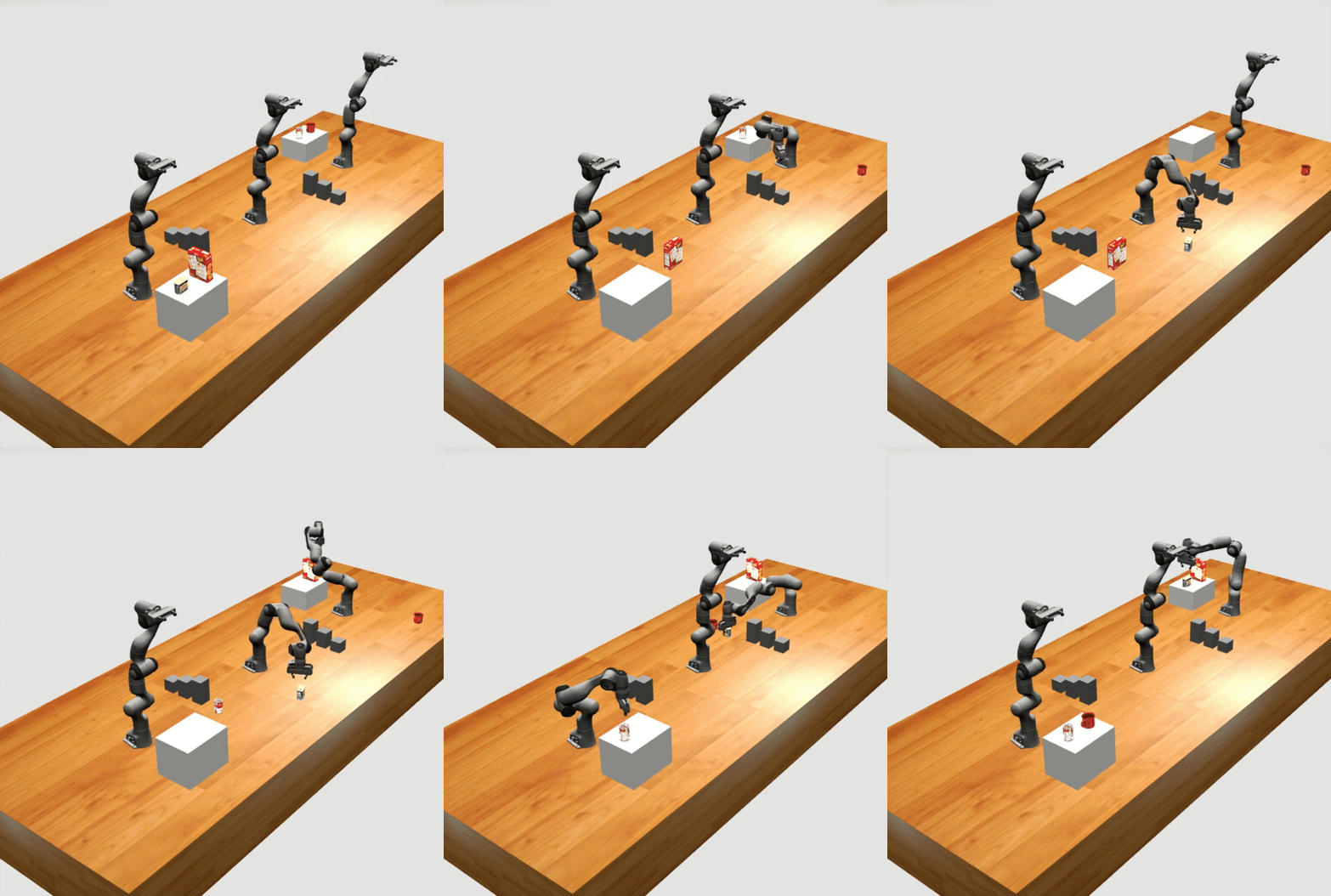
Long-swap Problem
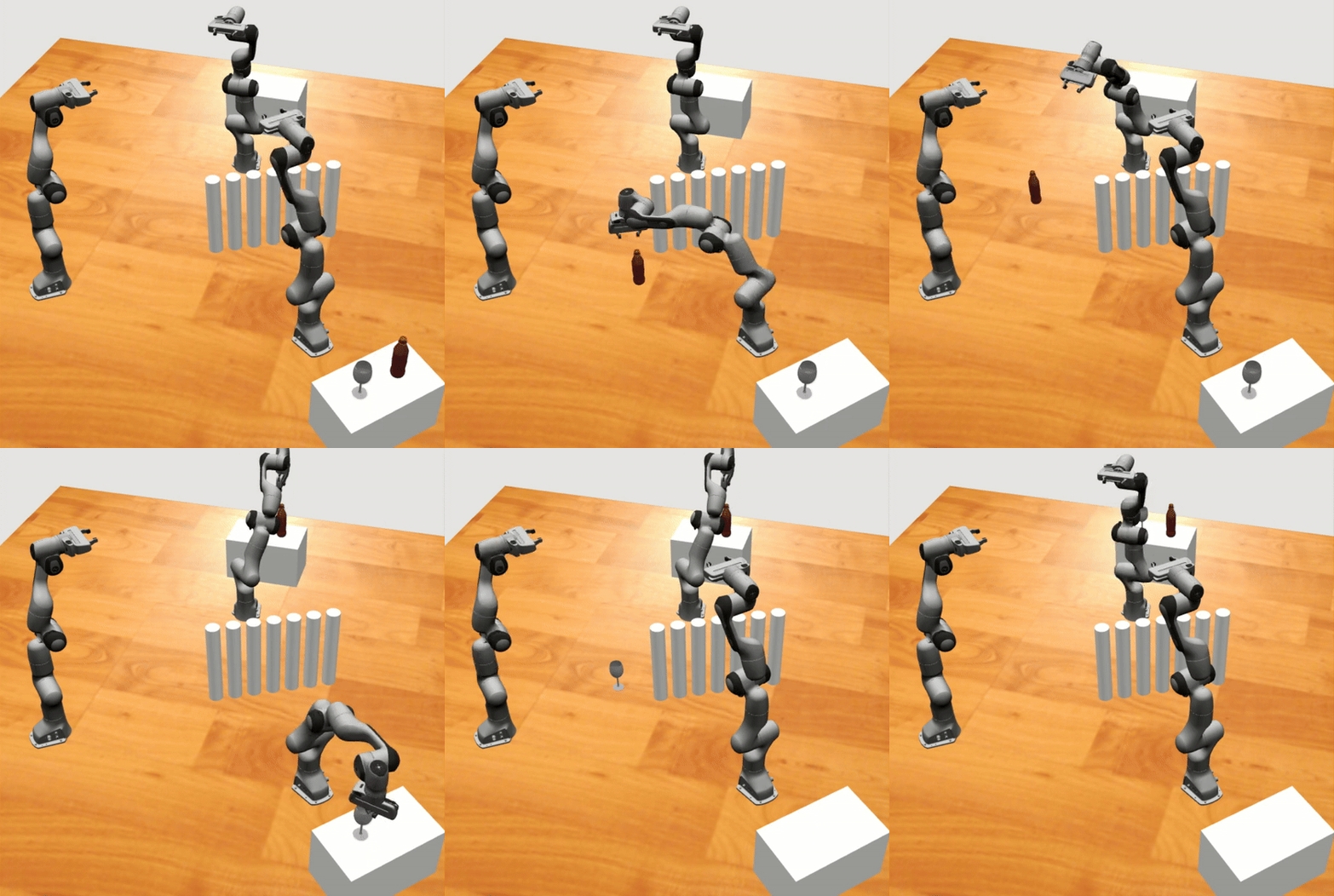
Middleman3 Problem
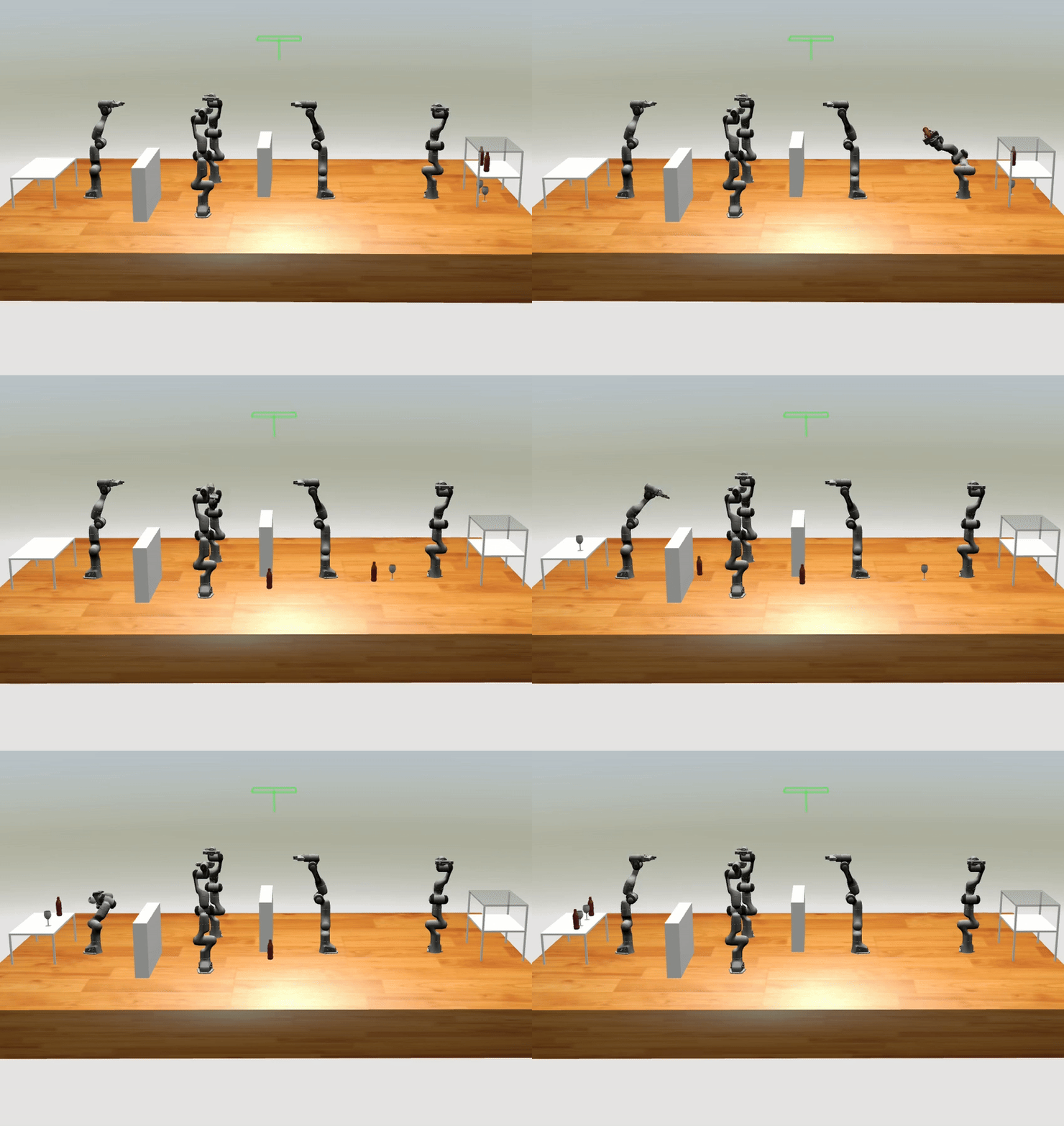
Middleman5 Problem
BibTeX
            @inproceedings{ait2024extending,
              title={Extending Task and Motion Planning with Feasibility Prediction: Towards Multi-Robot Manipulation Planning of Realistic Objects},
              author={Ait Bouhsain, Smail and Alami, Rachid and Simeon, Thierry},
              booktitle={2024 IEEE/RSJ International Conference on Intelligent Robots and Systems (IROS)},
              pages={10318--10325},
              year={2024},
              organization={IEEE}
            }